EBIC President calls on EU to deliver smarter future for biostimulants
June 2025
The EU must act fast and decisively for agricultural innovation
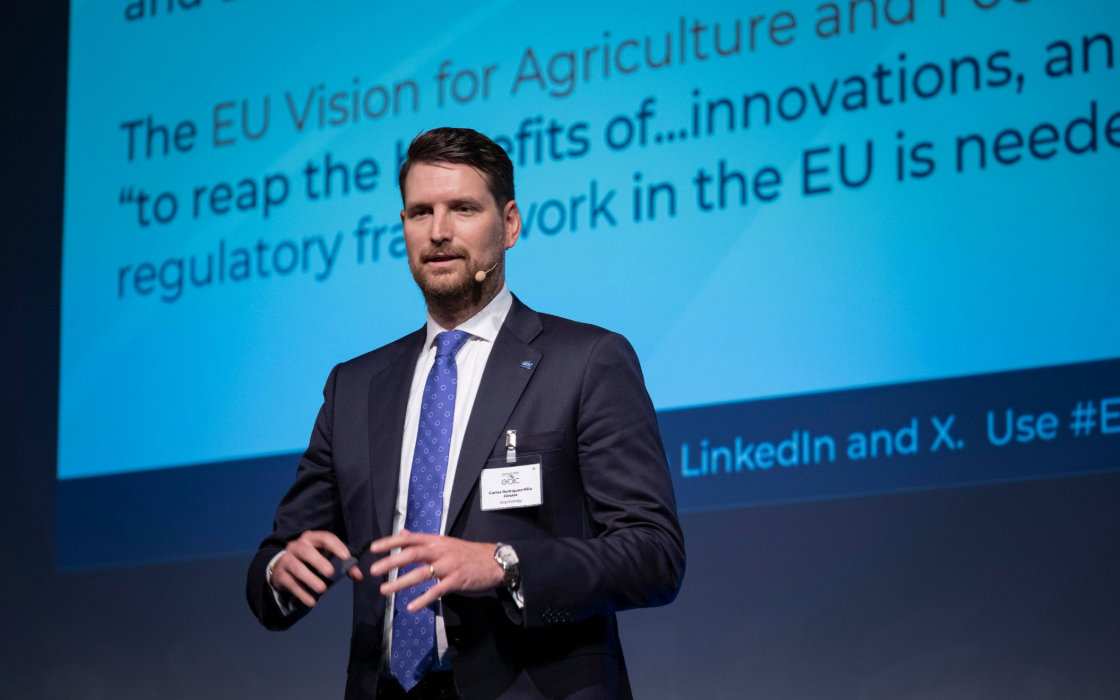
Closing the 2025 EBIC Summit, Carlos Rodriguez-Villa Förster, President of EBIC, delivered a powerful call to action: it is time for the EU to be bold, take calculated risks, and implement regulation that unlocks innovation rather than stifling it.
The Summit brought together leaders from industry, academia and policy to address the European Union can secure a competitive, resilient agri-food sector through smarter use of plant biostimulants. But Carlos’ closing message pointed to one critical barrier: a regulatory framework that is no longer fit for purpose.
“The EU says it wants to lead in sustainable innovation. But that vision will remain out of reach unless we simplify the rules that are blocking access to proven, safe and sustainable tools for farmers,” he said.
A broken system demands bold reform
Carlos underscored how the complexity and rigidity of today’s rules, especially within the Fertilising Products Regulation (FPR) and companion regulations it references, are delaying market access, discouraging investment, and ultimately preventing farmers from using products that can improve soil health, nutrient use efficiency and climate resilience.
EBIC’s position is clear: simplifying EU regulation is essential to strengthening agri-food competitiveness, protecting Europe’s strategic autonomy, and ensuring farmers have access to effective tools.
In particular, EBIC calls on the EU to:
- Restore normal REACH requirements for fertilising products, removing the excessive burden of “extended REACH registration” that the FPR currently applies to low-volume, low-risk substances;
- Create a criteria-based, third-party evaluable process to expand the list of micro-organisms permitted in plant biostimulants under CMC 7;
- Establish a science-driven framework to authorise animal by-products that are safe and circular, especially hydrolysed proteins, under CMC 10.
These reforms were discussed in detail during Summit panels, which highlighted how SMEs are being forced out of the market due to unnecessary red tape and how other sectors such as food supplements, animal feed, and composting experience similar issues.
“The EU should take its own advice,” said Rodriguez-Villa. “Be bold. Take calculated risks. And create regulation that enables, not prevents, the transition to sustainable agriculture.”
A new legislative window
With the European Commission already exploring regulatory simplification, including a forthcoming agriculture simplification package at the end of the year, the biostimulants industry is urging the Commission to act quickly and decisively to align its regulatory framework with the ambitions of the Green Deal, the Farm to Fork Strategy, and the new Vision for Agriculture and Food.
As EBIC continues its dialogue with policymakers and regulators, Carlos’ closing words made clear that this is a moment of both challenge and opportunity.
“We can’t afford to lose another five years to legislative gridlock. Farmers need solutions now. We must build a smarter, faster, and more resilient regulatory system, for the benefit of all.”