EBIC presents on joint letter at ESPP workshop
January 2025
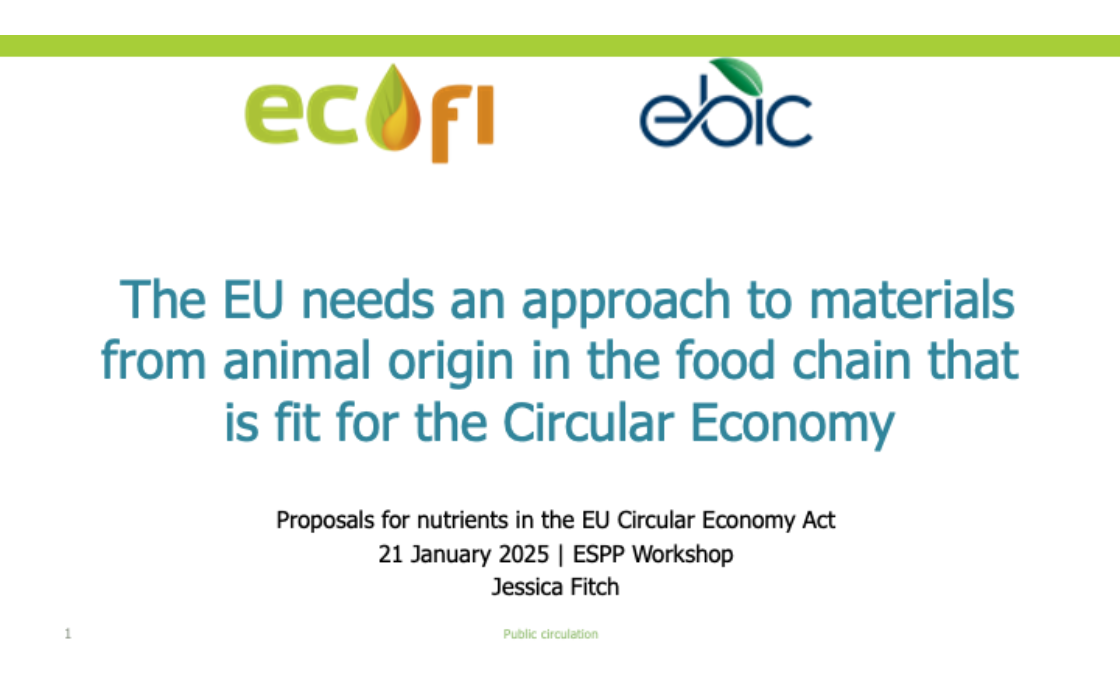
On 21 January, EBIC was represented by Jessica Fitch (EBIC Secretariat) at an ESPP stakeholder workshops on nutrients in the upcoming EU Circular Economy Act. In a joint presentation between EBIC and ECOFI, Ms Fitch outlined the need for the EU to have a new approach to materials of animal origin in the food chain that is fit for the Circular Economy. The European Commission has identified working on the creation of a resilient and circular economy as an important part of the EU’s work in the 2024 to 2029 legislative term. The industry’s ability to revalorise animal by-products is vital for the EU Circular Economy’s success. However, policy incoherence and inconsistencies are currently restricting industries’ use of these by-products in fertilising products such as plant biostimulants. These issues are of great importance to many EBIC members. In early 2024, EBIC organised a joint letter, which was signed by 15 other organisations, calling on the European Commission “to undertake a comprehensive review of the European Union’s approach to the regulation of materials from animal origin”. Without this, the EU will not be able to make a functioning circular economy a reality, missing an opportunity to enhance EU competitiveness and support farmers.
At the ESPP workshop, Jessica Fitch reiterated the core demands of this letter, calling on EU regulators to ensure policy coherence between the Animal By-Product Regulation and the Fertilising Products Regulation, as well as other EU legislative frameworks, to promote the development of the European circular economy and to facilitate access to the market and uptake of high-quality and sustainable products such as plant biostimulants.
Visit the EBIC website to read the letter to DG SANTE. If you are interested in learning more about EBIC’s work on animal by-products, contact Hélène Collignon (helene@prospero.ag), who supports the work of the EBIC’s Animal By-Products Project Team.